Master UI/UX Design
& Build Real Products

that Get You Hired

Join the most practical UI UX Design Course in Pune and learn to design user-friendly websites, apps, and digital products. Master tools like Figma, Framer, and AI-powered design workflows while creating a professional portfolio that gets noticed by top recruiters.
Hands-On Projects

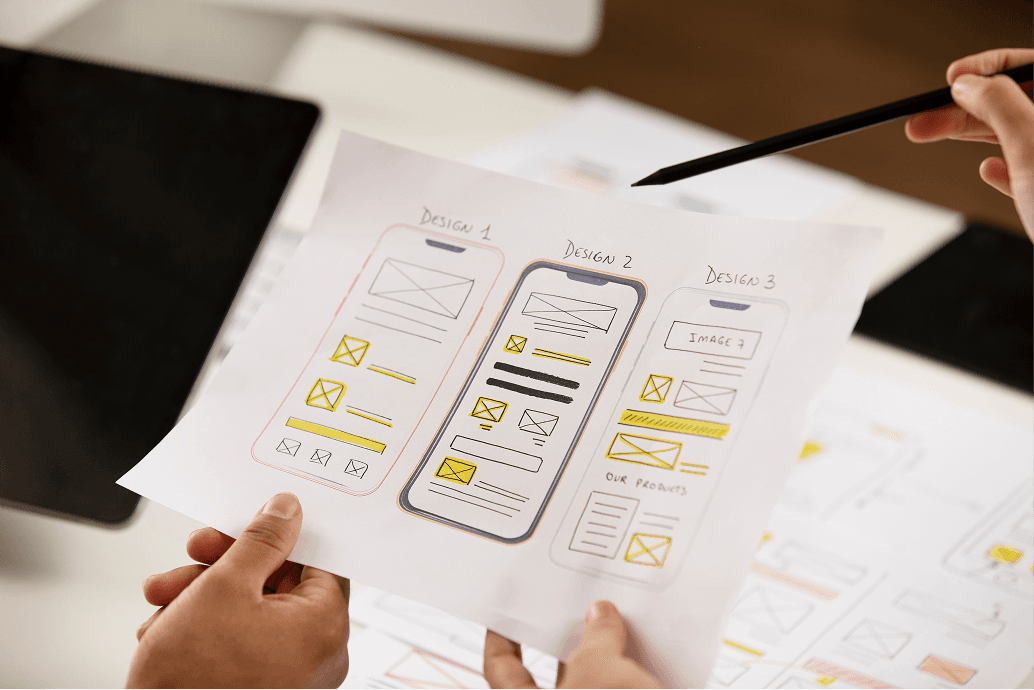
Work on real-world projects to build a strong, job-ready portfolio.

Expert Mentorship

Get guidance from industry professionals with real design experience.

AI-Powered Learning

Stay updated with AI-driven tools, workflows, and design insights.

Our Course Benefits
  • Learn User Interface & User Experience Design from experts

  • Work on live projects that build your real-world experience

  • Master AI in Design – Figma AI, ChatGPT for research, GPT-UX for ideation

  • Get personal mentorship from industry professionals

  • Receive career guidance and placement support after course completion

Requirements
  • A laptop & stable internet

  • Basic computer skills and curiosity to learn

  • Interest in creativity, technology, and design thinking

  • No prior design experience needed - we start from scratch!

Our Course Highlights
  • Hands-on projects using Figma, Framer & GPT-UX

  • Learn No-Code Prototyping & AI-Driven Design

  • Build a Portfolio that Lands Jobs & Freelance Clients

  • 100% Placement Assistance with resume & interview training

Why Choose Radiquolab’s UI/UX Design Course

At Radiquolab Design Institute, we don’t just teach tools - we shape thinkers and problem-solvers.Our course blends design thinking, AI workflows, and no-code tools to help you become a job-ready UI/UX designer in just a few months.

What You’ll Learn
Introduction to UI/UX & Design Thinking

Understand human-centered design, user needs, empathy maps, and research methods.

User Research & UX Strategy

Conduct surveys, interviews, and usability tests. Learn to define personas and user journeys.

Wireframing & Prototyping in Figma

Create interactive wireframes, mobile & web layouts, and prototype your designs.

UI Design & Visual Systems

Learn typography, colors, grids, accessibility, and responsive UI layouts.

No-Code Development with Framer

Turn your Figma designs into live websites using Framer No-Code Builder — no coding required.

AI-Enhanced Design Tools

Use Figma AI, ChatGPT, and GPT-UX to accelerate your creative process.

Portfolio Building & Case Studies

Build your professional portfolio on Behance and Dribbble, including complete design case studies and storytelling.

Soft Skills & Presentation

Master design critique, client communication, and storytelling to present your work with confidence.

What You’ll Get After The Course

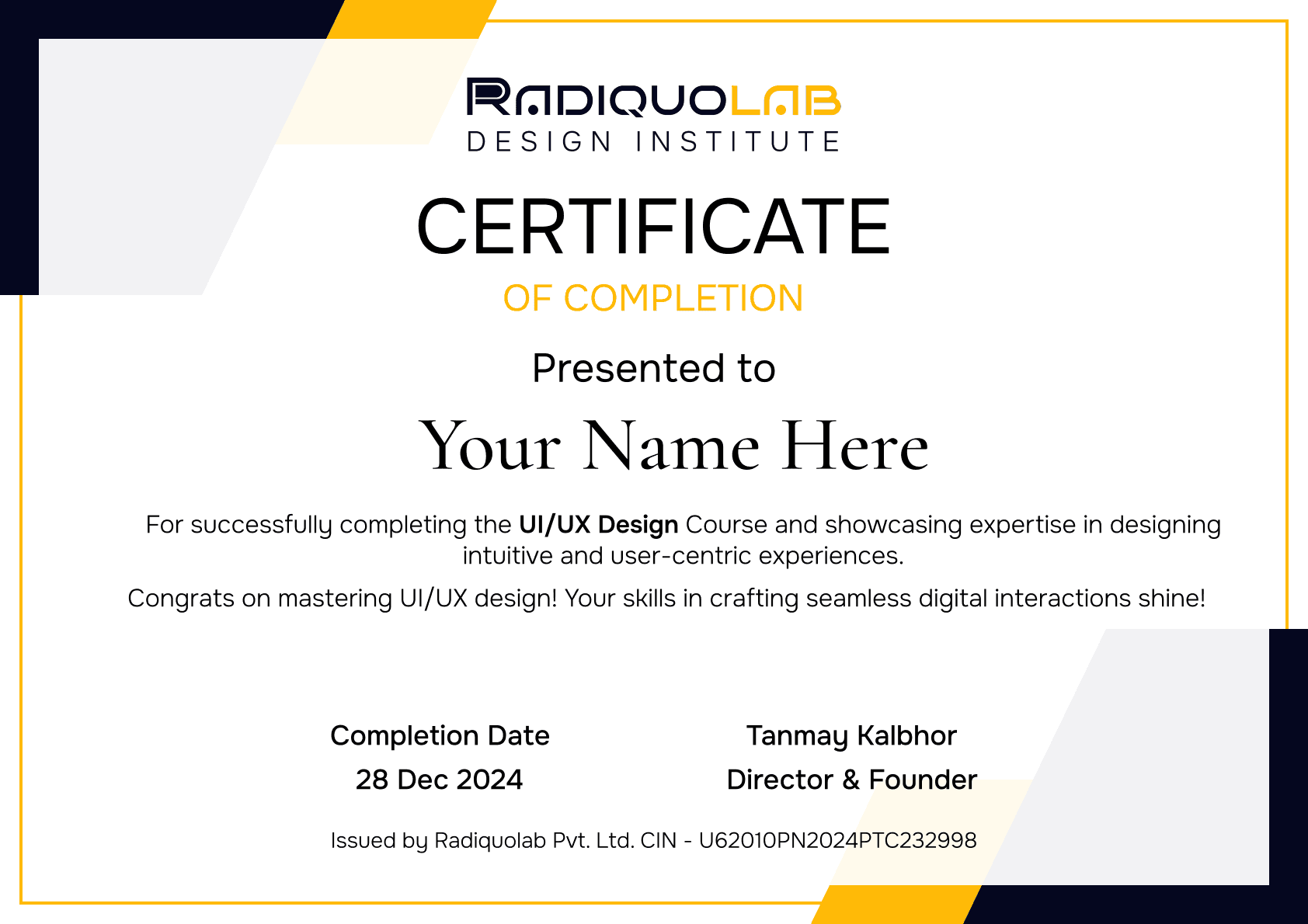
Certificate of Completion recognized by Radiquolab

Access to community events, workshops, and alumni network

1:1 Mentorship & Feedback Sessions

Job-Ready Portfolio with 5+ real projects

100% Placement Assistance - job referrals, resume building, and mock interviews

Who Should Join?
  • Students or graduates aspiring to start a career in UI/UX design

  • Graphic designers or visual artists wanting to shift to digital product design

  • Developers looking to learn design thinking and user interface principles

  • Entrepreneurs who want to design their own apps or websites

  • Freelancers aiming to expand their services with UI/UX design skills

  • Professionals from any field interested in creative, user-centered design

  • Anyone passionate about design, creativity, and technology

Course

Content

Module 1: Introduction to UI/UX Design

UI vs. UX: Key differences and roles.
Design Thinking: Empathize, Define, Ideate, Prototype, Test, Iterate.
Visual Design Basics: Typography, color, spacing, and grids.
User-Centered Design: Personas and focusing on user needs.

Module 2: User Research & Problem Definition

Research Methods: Interviews, surveys, usability tests.
Competitive Analysis: Studying competitors and market trends.
Problem Framing: Defining design challenges and goals.
Ideation: Sketching and brainstorming solutions.

Module 3: Information Architecture & UX Strategy

Information Architecture: Structuring user flows.
User Journeys: Mapping user interactions.
Accessibility: Designing for all users.
Design Systems: Creating scalable systems.

Module 4: Wireframing & Prototyping

Wireframes: Low and high-fidelity wireframes.
Interactive Prototypes: Using Figma/Adobe XD for clickable designs.
Usability Testing: Gathering feedback and iterating.

Module 5: User Interface Design

Multi-Platform Design: Best practices for mobile, web, and tablet.
Micro interactions: Enhancing user experience with animations.
Design Systems: Ensuring consistency.
Collaboration: Figma for team handoffs.

Module 6: Portfolio Building & Career Prep

Portfolio: Showcasing case studies and skills.
Resume Writing: Design-focused resumes.
Mock Interviews: Interview prep and job search strategies.

Module 1: Introduction to UI/UX Design

UI vs. UX: Key differences and roles.
Design Thinking: Empathize, Define, Ideate, Prototype, Test, Iterate.
Visual Design Basics: Typography, color, spacing, and grids.
User-Centered Design: Personas and focusing on user needs.

Module 2: User Research & Problem Definition

Research Methods: Interviews, surveys, usability tests.
Competitive Analysis: Studying competitors and market trends.
Problem Framing: Defining design challenges and goals.
Ideation: Sketching and brainstorming solutions.

Module 3: Information Architecture & UX Strategy

Information Architecture: Structuring user flows.
User Journeys: Mapping user interactions.
Accessibility: Designing for all users.
Design Systems: Creating scalable systems.

Module 4: Wireframing & Prototyping

Wireframes: Low and high-fidelity wireframes.
Interactive Prototypes: Using Figma/Adobe XD for clickable designs.
Usability Testing: Gathering feedback and iterating.

Module 5: User Interface Design

Multi-Platform Design: Best practices for mobile, web, and tablet.
Micro interactions: Enhancing user experience with animations.
Design Systems: Ensuring consistency.
Collaboration: Figma for team handoffs.

Module 6: Portfolio Building & Career Prep

Portfolio: Showcasing case studies and skills.
Resume Writing: Design-focused resumes.
Mock Interviews: Interview prep and job search strategies.

Module 1: Introduction to UI/UX Design

UI vs. UX: Key differences and roles.
Design Thinking: Empathize, Define, Ideate, Prototype, Test, Iterate.
Visual Design Basics: Typography, color, spacing, and grids.
User-Centered Design: Personas and focusing on user needs.

Module 2: User Research & Problem Definition

Research Methods: Interviews, surveys, usability tests.
Competitive Analysis: Studying competitors and market trends.
Problem Framing: Defining design challenges and goals.
Ideation: Sketching and brainstorming solutions.

Module 3: Information Architecture & UX Strategy

Information Architecture: Structuring user flows.
User Journeys: Mapping user interactions.
Accessibility: Designing for all users.
Design Systems: Creating scalable systems.

Module 4: Wireframing & Prototyping

Wireframes: Low and high-fidelity wireframes.
Interactive Prototypes: Using Figma/Adobe XD for clickable designs.
Usability Testing: Gathering feedback and iterating.

Module 5: User Interface Design

Multi-Platform Design: Best practices for mobile, web, and tablet.
Micro interactions: Enhancing user experience with animations.
Design Systems: Ensuring consistency.
Collaboration: Figma for team handoffs.

Module 6: Portfolio Building & Career Prep

Portfolio: Showcasing case studies and skills.
Resume Writing: Design-focused resumes.
Mock Interviews: Interview prep and job search strategies.

Tools

You’ll Master

From design to development, get hands-on with the latest tools.

Figma

Framer

Adobe XD

ChatGPT

Miro

Motiff

ideogram

Otter

Certificate